

I started playing D&D in the 1980s, and from the beginning I was drawn to medieval and dark fantasy. The worlds that stayed with me were not heroic or clean. They were bleak, strange, and morally uncertain.
In that era, the fantasy zeitgeist leaned toward the underdog and the anti-hero. Films and books were grittier, morally ambiguous, and often indifferent to happy endings. Heroes were flawed. Victory came at a cost. The world rarely cared whether you were righteous or not.
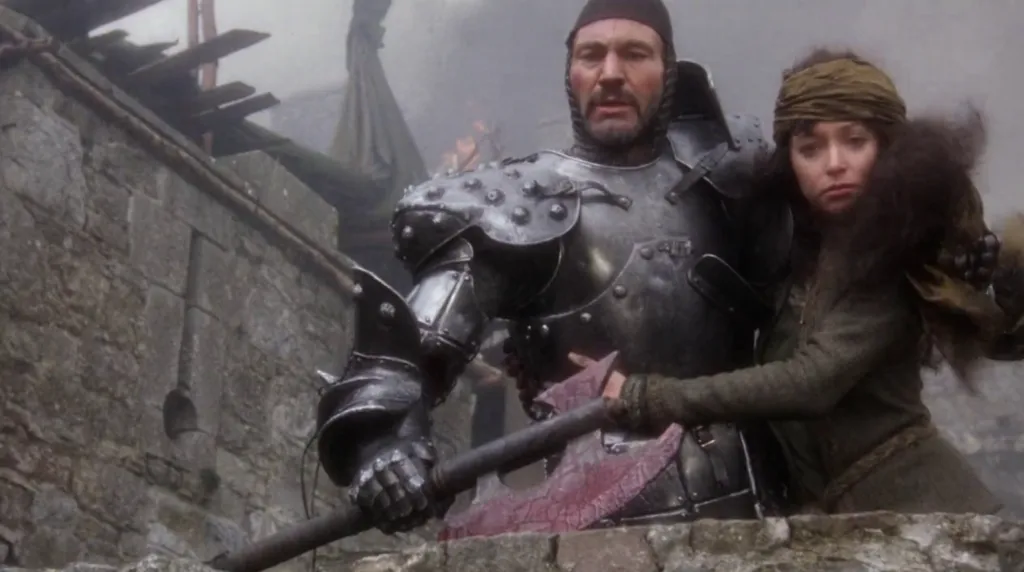
Films like Conan the Barbarian, Flesh + Blood, The Devils, Heavy Metal, Wizards, Fire & Ice, Excalibur, Roman Polanski’s Macbeth, and The Name of the Rose presented fantasy or medieval worlds that were brutal, superstitious, and indifferent to idealism. Power was taken, not granted. Faith was complicated. Violence was sudden and often meaningless. These were not worlds built for heroes, they were worlds adventurers had to endure. The ordinary achieving the extraordinary.
The same tone ran through the fiction I read in my teenage years. Michael Moorcock’s Elric of Melniboné depicted a doomed figure sustained by sorcery and addiction, trapped by fate rather than uplifted by it. Glen Cook’s The Black Company offered a hard look at soldiers and mercenaries, people who survived by compromise, not virtue.
These stories were morally ambiguous. Power was corrupting. Survival was its own form of victory. Good versus evil existed mostly in shades of grey. That sensibility has stayed with me ever since.
Today, popular culture is dominated by superheroes and heroic fantasy. Still, a few films and books break through; Valhalla Rising and Game of Thrones among them. Part of Game of Thrones’ appeal, I think, was its return to moral ambiguity and its rejection of the clean, heroic tropes that define much of modern fantasy.
While I do enjoy epic heroic fantasy, my preference has always been for something darker, low fantasy, or medieval. A more dangerous, unforgiving world. A space to explore consequence, ambiguity, and the cost of choices made in a hostile place.
World Before Options
D&D, by default, is a vast smorgasbord of races, classes, and options. While that flexibility is a strength, I have always felt that part of the Dungeon Master’s role is to provide a foundation, a coherent world for players to engage with.
Rather than handing players the Player’s Handbook and saying “pick anything,” I prefer to let the world itself do some of the talking. The peoples who inhabit it, the way magic functions, and the underlying lore should shape what kinds of characters make sense.
For that reason, I have long curated lists of playable races and class/subclass options when starting a campaign or adventure. One time, I created a forest world populated only by halflings and gnomes, where characters could only be druids or rangers. Another time, I ran a strictly medieval setting (Excalibur), humans only, with clerics, paladins, and wizards. I have also suggested playable race and class settings to reinforce tone in campaigns like Legends of Barovia. (See Legends of Barovia Campaign & Player Guide for the suggested lists).
The goal is not restriction for its own sake, but cohesion: a shared starting point and a common cultural and thematic bond. I usually give players a few succinct sentences to describe the world. Enough to give them roots and context, while still leaving room for personal interpretation as they create their characters.
2024 D&D – Dark Fantasy
With the release of the 2024 Player’s Handbook, I revisited my dark fantasy / grim dark setting and its character options. Drawing on Witcher and Elric inspired traditions of moral ambiguity and hard choices, I refined a focused list of playable races and classes.
The intent is simple: to ground players in a dark fantasy world from the very first decision they make, and to ensure that every character feels like they belong in a setting where nothing is clean, power is never free, and survival is never guaranteed.
Short introduction to the Dark Fantasy setting:
The world is dark. Humans dominate, kingdoms are corrupt, and warlords vie for power. In deep forests and ancient ruins, something older and more dangerous stirs.
Notes on Creating the List
Peoples, Professions, and the Shape of Survival
This setting is built around consequence and hard choices. It is not a world of endless peoples or unchecked magic. Civilization survives. Monsters exist, results of old wars, broken oaths, forbidden magic, and human ambition.
Power is corrupt. Magic is watched. Faith is heavy with obligation. Violence is often the only solution left.
Humans dominate the world, and in doing so define what is normal. Everything else is measured against that standard.
D&D 2024 Dark Fantasy Race / Class List
Here is my Dark Fantasy general theme and playable races and classes updated for D&D 2024.
Humans
The default. The problem. The survivors.
Humans are everywhere. They rule kingdoms, enforce laws, build churches, raise armies, they are the village populations. Most wars and witch hunts are driven by humans trying to control their world.
Monster hunters, clergy, soldiers, scholars, and criminals are overwhelmingly human, not because humans are exceptional, but because they endure the world as it is and impose order where they can. Class choice is a survival choice in a dark world.
When I think of humans in this world, I think of The Witcher mixed with The Black Company, Excalibur, and countless gritty medieval low-fantasy novels. A world shaped less by destiny than by necessity, where survival matters more than virtue.
Humans dominate land, law, faith, and war. Their institutions define what is normal and therefore what is feared and outlawed.
Common Human Classes (2024 PHB)
Bard (Valor)
War-poets and chroniclers of fallen heroes and lost causes. Songs as memory, not celebration.
Cleric (Life, Light)
Sanctioned faith. Healing bound by doctrine. Light as judgment as much as mercy.
Fighter (Champion, Eldritch Knight)
Soldiers, veterans, state-trained warriors. Discipline before idealism. Magic tightly controlled.
Monk (Way of Shadow)
Secret orders, inquisitors, spies, assassins of crown or church. Violence with purpose and silence.
Paladin (Oath of Vengeance)
Grim oath-sworn hunters. Relentless, feared, and rarely thanked.
Ranger (Gloom Stalker)
Monster hunters, border wardens, night stalkers.
Rogue (Thief)
Criminals, smugglers, informants, survivalists. Crime as necessity, not elegance.
Sorcerer (Wild Magic)
Unstable bloodlines. Feared, watched, and blamed when things go wrong.
Warlock (Fiend, Great Old One)
Forbidden pacts. Hidden patrons. Cult-like secrecy and quiet heresy.
Elves
A people in decline.
Their ancient realms are gone. Their influence diminished. Their traditions rigid with age. They remember a world before human dominance, and many resent being forced to live in its shadow.
These are the elves of Elric’s world, dark, foreboding, and alien. Certainly not the flamboyant, cheerful elves of Middle-earth.
Elves are rare in cities and treated with suspicion. Most dwell in border forests, ruins, or isolated enclaves, clinging to customs that no longer shape the world.
They endure, but they do not adapt easily. Elves embody loss, memory, and the long cost of immortality.
Common Elven Classes (2024 PHB)
Druid (Circle of the Moon, Circle of Stars)
Ancient rites. Primal survival. Celestial cycles remembered longer than human history.
Ranger (Fey Wanderer)
Deep-forest wardens. Liminal figures walking between fading worlds.
Wizard (Diviner, Abjurer, Illusionist)
Old magic. Slow rituals. Knowledge preserved, not expanded.
Dwarves
Endurance over glory.
Dwarves endure where others collapse. Their holds are old, their oaths older still. Stone, clan, and ancestry define identity, and the dead are never truly forgotten.
They are often hired for dangerous work; reclaiming ruins, sanctifying tombs, but rarely welcomed as equals. Stability makes them reliable, not beloved.
Think the dwarves from the Mines of Moria.
They know the world is failing. They plan accordingly.
Common Dwarven Classes (2024 PHB)
Cleric (War Domain)
Militant ancestral faiths. Sacred violence in defense of clan and tomb.
Fighter (Battle Master, Champion)
Disciplined veterans. Hold-guard captains. Reliability forged through hardship.
Orcs (Rare)
Feared long before they are known.
History paints orcs as destroyers, and society is slow to forgive even those generations removed from old wars.
Many live as mercenaries, laborers, or exiles. Strength is expected of them. Mercy is not. Redemption is possible, but rarely offered freely.
These are closer to the Conan archetype: battle-hardened, shaped by violence, perhaps remnants of an older people. A race treated not as equals, carrying the scars of conquest, displacement, or enslavement.
Orcs reveal how easily societies justify cruelty when it is convenient. They are treated as weapons, not citizens.
Common Orc Classes (2024 PHB)
Barbarian (Path of the Berserker)
Rage as survival. Fury shaped by hardship, not savagery.
Fighter (Battle Master)
Discipline learned the hard way. Control wrested from chaos.
Halflings (Rare)
Hardy rural folk.
Halflings are farmers, millers, ferrymen, innkeepers. They endure war, famine, and monsters not through heroics, but through stubborn resilience.
When halflings take up dangerous professions, it is usually because no one else will. They remind the world what is lost when monsters roam unchecked.
Think of a rougher, more hard-used hobbit. A Bilbo or Frodo edged by hunger, fear, and the knowledge that no one is coming to save the village.
Common Halfling Classes (2024 PHB)
Bard (Lore)
Storytellers, record-keepers, quiet truth-bearers. History remembered so it isn’t lost.
Rogue (Arcane Trickster, Thief)
Clever defenders. Folk magic. Survival through wit rather than force.
Magic, Faith, and Violence
Magic exists, but it is not free. Sorcerers are feared. Warlocks are hunted when discovered. Wizards operate under scrutiny. Faith offers comfort, but also control. Paladins and monks are not shining heroes, they are instruments of necessity.
Monster hunters are respected and avoided in equal measure. Their work is essential, but no one wants to hear what they have seen.
This is not a world of chosen ones.
It is a world of survivors.
The world does not promise justice.
Only survival.

Conclusion
Setting Themes, Not Just Options
This ultimately comes down to one question: what is the world about?
Every setting has themes, whether we name them or not; moral ambiguity, survival over heroism, power with consequences, decline instead of progress. When those themes are clear, choices around playable races and classes stop feeling arbitrary and start feeling grounded.
For me, dark fantasy works best when the world shapes the characters from the start. Race and class are not just mechanical options; they reflect culture, history, and pressure. Adventurers should feel like they belong to the world.
That is the purpose of this list: not to restrict choice, but to signal the kind of world players are stepping into.
What About Your Table?
What themes drive your settings?
Do you curate playable races and classes to reinforce tone, culture, and history or do you prefer a more open approach?
Have you built worlds where limitation created stronger cohesion, or where everything-on-the-table was part of the point?
I would genuinely love to hear how other DMs approach this.
Share your themes, your restrictions (or lack of them), and the worlds you’ve built in the comments.
It's a conversation worth having and sharing.


