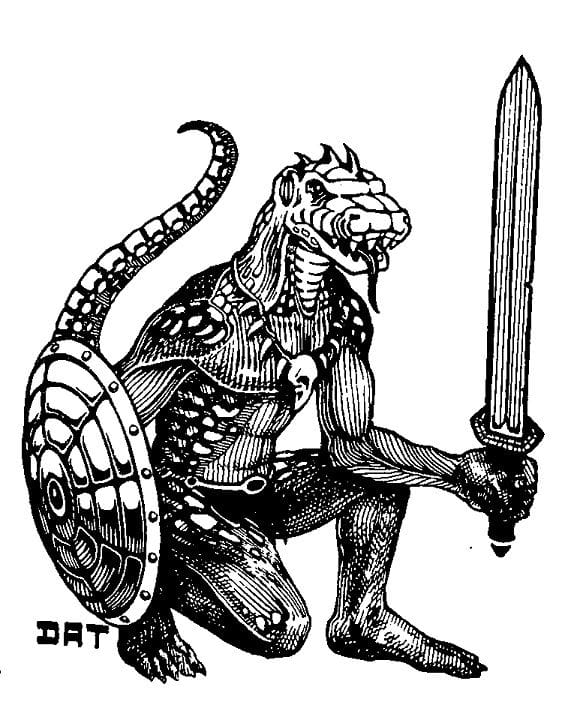
For centuries, the lizardfolk of the Hool Marsh have lived between survival and struggle, some guided by the quiet instinct of Semuanya, others twisted by the dark influence of Sess’inek and the legacy of the Lizard King. With sahuagin invading from the sea and Sakatha rising again in the north, the marsh has become a battleground of history, faith, and revenge. This article dives into their origins, their divisions, and how these ancient reptilian nations shape Legends of Saltmarsh.
As I am working on Legends of Saltmarsh, my expanded take on Ghosts of Saltmarsh and the wider world of Greyhawk, one thing becomes very clear: the lizardfolk are not a footnote in the Hool Marsh. They are a major presence, shaped by two very different threats. One is ancient, nearly forgotten. The other is painfully modern: the sahuagin who have seized their coastal homes.
Ghosts of Saltmarsh anchors itself in one of the most iconic module series in D&D canon, U1–U3: The Sinister Secret of Saltmarsh, Danger at Dunwater, and The Final Enemy. At the center of that thread is the lizardfolk arming for war against the sahuagin who have driven them from their lairs and now threaten every aquatic and humanoid race along the coast. I had played U1 and U2 back in the 1980s and it is one reason that has propelled me into this project.
Legends of Saltmarsh goes a step further, weaving in other adventures set in and around the region. When we look at the Hool Marsh, another classic module comes into play: I2 Tomb of the Lizard King, set in the marsh’s northern reaches.
This creates two very different encounters with the lizardfolk:
- In the south, a diplomatic clan seeking allies against the sahuagin invasion.
- In the north, a darker clan united under their resurrected king, hungry for revenge against the humans who struck him down centuries ago.
The point is simple: not all lizardfolk are the same. Their clans have different histories, goals, threats, and values. Some seek cooperation. Others seek conquest. A few would be perfectly content eating the adventurers if negotiations break down.
The lizardfolk are a complicated people, shaped by survival, religion, ancient grudges, outside threats, and the shifting politics of the Hool Marsh.
In this blog post, I am diving into material from the original U1–U3 adventures, Tomb of the Lizard King, Ghosts of Saltmarsh, Greyhawk lore, and other pieces of D&D canon to assemble a coherent picture of the lizardfolk of the Hool Marsh. My aim is to stay close to Greyhawk 576 CY (pre–Greyhawk Wars), while acknowledging that canon shifts across editions. Where the lore clashes, and it does, I will do what every DM eventually does: weave the threads together, interpret the gaps, and respect the spirit of the original world.
Origin of the Lizardfolk of the Hool Marsh
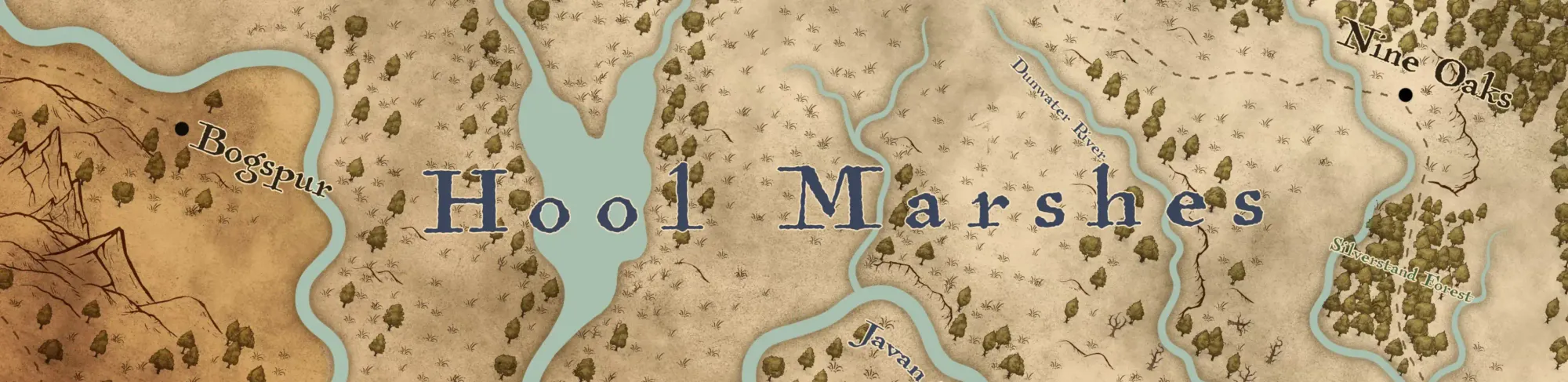
Lizardfolk are among the oldest native peoples of Oerth’s wetlands, having evolved naturally in the primeval swamps and brackish deltas long before human kingdoms rose. They were not created by gods or magic; instead, their practical, survival-driven species. Their earliest ancestors lived along shallow rivers and floodplains, gradually adapting to the Hool Marsh. From dragons they learned language, from the swamp they learned patience, and from relentless predators they learned caution. They are a species built on survival in a difficult landscape.
By the time humans settled Keoland’s coast, the lizardfolk were already ancient divided into scattered clans, each shaped by its environment.
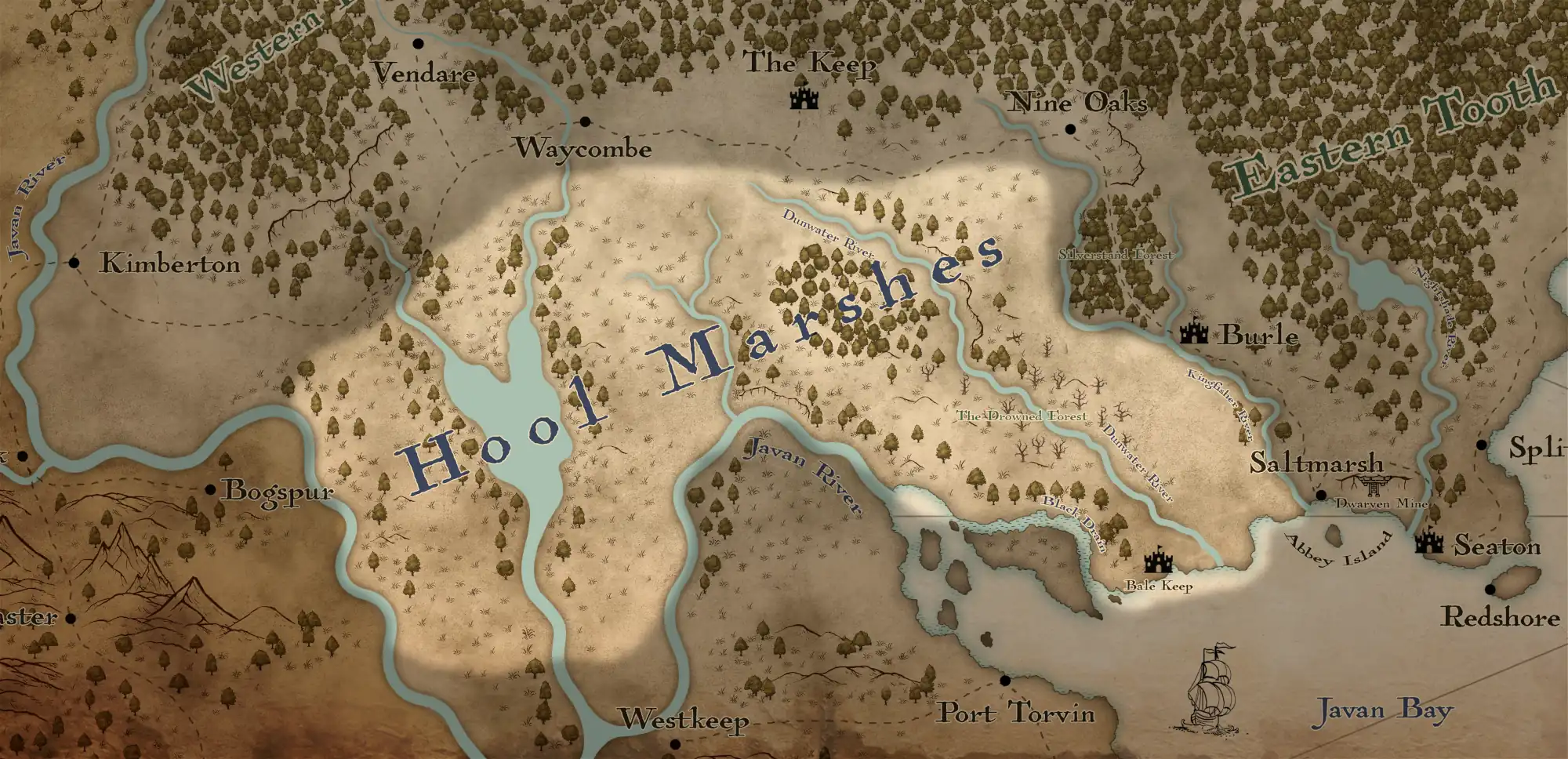
The Hool Marsh is one of the largest and most hostile wetlands in southern Keoland, and its brackish waterways, mud-choked deltas, and hidden freshwater pools make it ideal habitat for lizardfolk. While they can tolerate saltwater from the nearby Javan Bay, they overwhelmingly prefer the fresh and brackish waters inside the marsh, where their villages can hide among reeds, mangroves, and half-sunken ruins.
Lizardfolk History
For centuries, the lizardfolk of the Hool Marsh lived as scattered clans, each keeping to its own territory among the reeds, bogs, and marsh. They built stilt-villages, hunted the marshlands, and remained largely ambivalent toward the “warmbloods” who lived beyond the edges of their world. They were content with their isolation and their pragmatism, an old culture defined by survival, not sentiment.
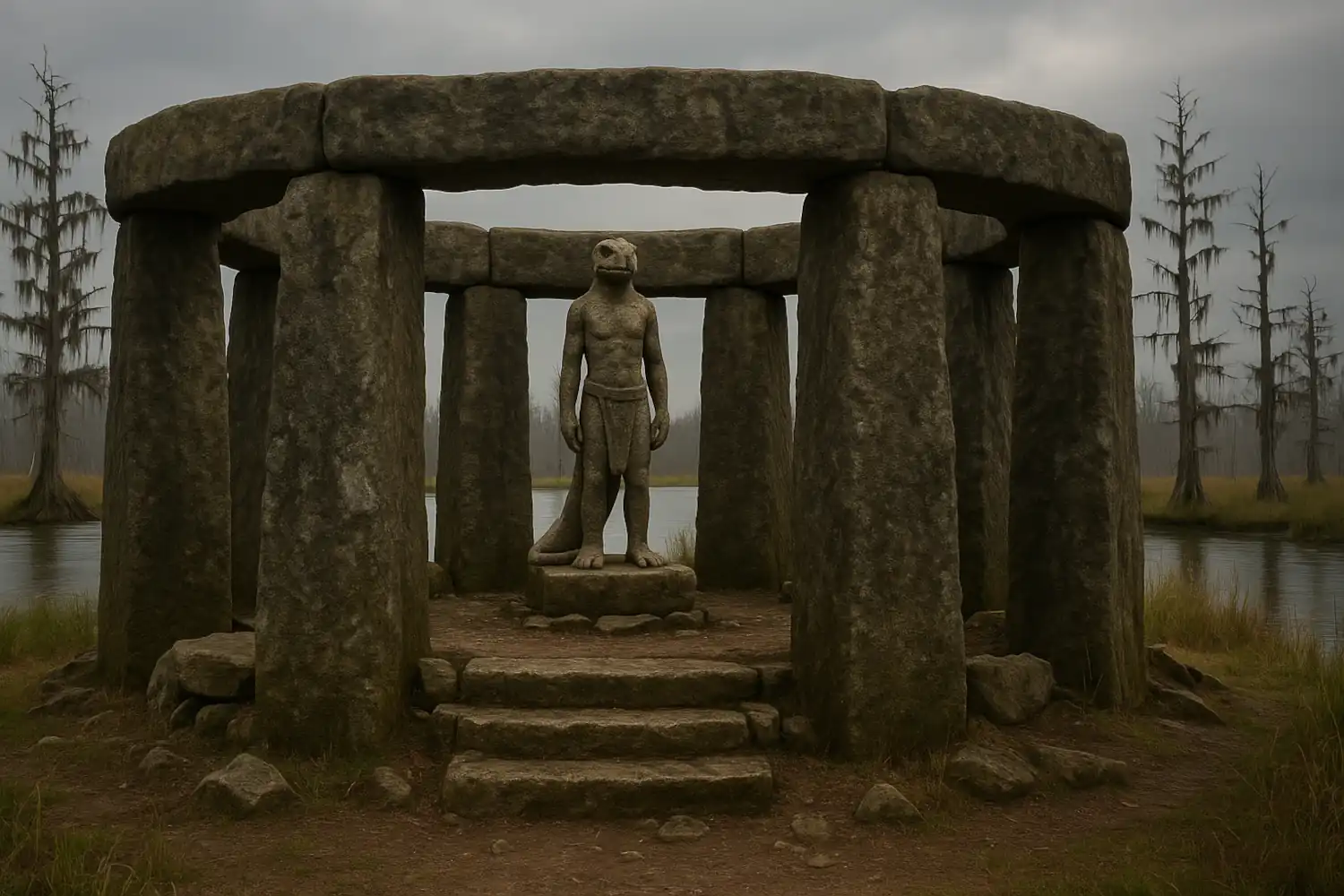
Most followed Semuanya, their ancient god of endurance and instinct. Along the Dunwater River, the tribes built a stone shrine where they gathered during the mating season, one of the few times the clans met peacefully. Life was simple, harsh, and predictable.
Semuanya
The Survivor, the Watcher, the Breeder
Semuanya is the spiritual reflection of lizardfolk nature: cold-blooded, practical, unburdened by the human obsession with morality. Neither good nor evil, Semuanya embodies the will to endure, to breed, to hunt, and to persist no matter the odds. To most lizardfolk, survival is sacred; emotion is a liability.
For ages, this guiding principle kept the Hool Marsh stable. Clans did not unite unless forced. They did not conquer unless desperate. Their faith kept them grounded.
Rise of Sakatha, the Lizard King
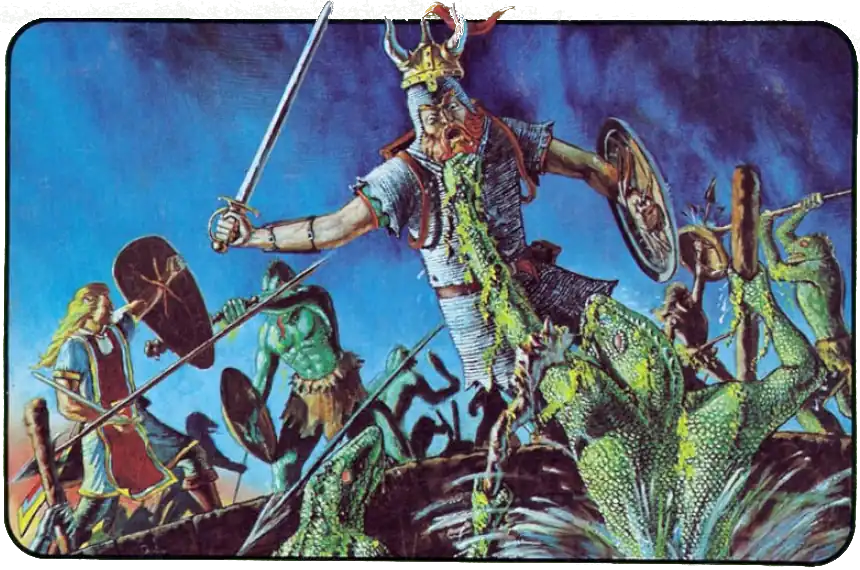
Around 326 CY, a monstrous being rose in the northern Hool Marsh. Sakatha was larger, stronger, and far more cunning than any lizardfolk before him. His ambition matched that of human tyrants, and his savagery went beyond anything the marsh had seen.
He declared that Semuanya was weak, and called upon the tribes to worship Sess’inek, the reptilian demon lord. Under his new gospel:
“Kill and devour the enemies of Sess’inek. Take their territory. Break the shamans of Semuanya. All warmbloods are foes.”
Rise to Power
Over decades, Sakatha forged an empire stretching from the Javan River in the west to the Kingfisher River in the east. He seized the Dunwater River from its headwaters to the Javan Bay.
He enslaved hundreds, mostly humans, and his rule was absolute. Dark magic, terror, and a growing reptilian army made him untouchable. With the help of wicked sorcerers, he constructed a vast temple-tomb complex deep in the northern reaches of the Hool Marsh: a monument to himself and a vault of treasure and sorcery.
Downfall (circa 362–365 CY)
Eventually, humanity struck back. The people of Waycombe and Vendare rose in rebellion. Sakatha led his lizardfolk armies personally into battle, but arrogance became his downfall. He was mortally wounded by the warrior from Vendare who would become the first Count of Eor, ruler of the region south of the Dreadwood.
As Sakatha lay dying, he made a final wish:
“To live long enough to drink the blood of those who defeated me, and the blood of their offspring through the ages.”
After the Fall
When the Lizard King finally fell, the united tribes shattered. Many fled south, beyond the Drowned Forest, settling along the lower Dunwater, the Black Drain and the coast of the Javan Bay. These clans abandoned Sess’inek, returned to Semuanya, and rebuilt their society.
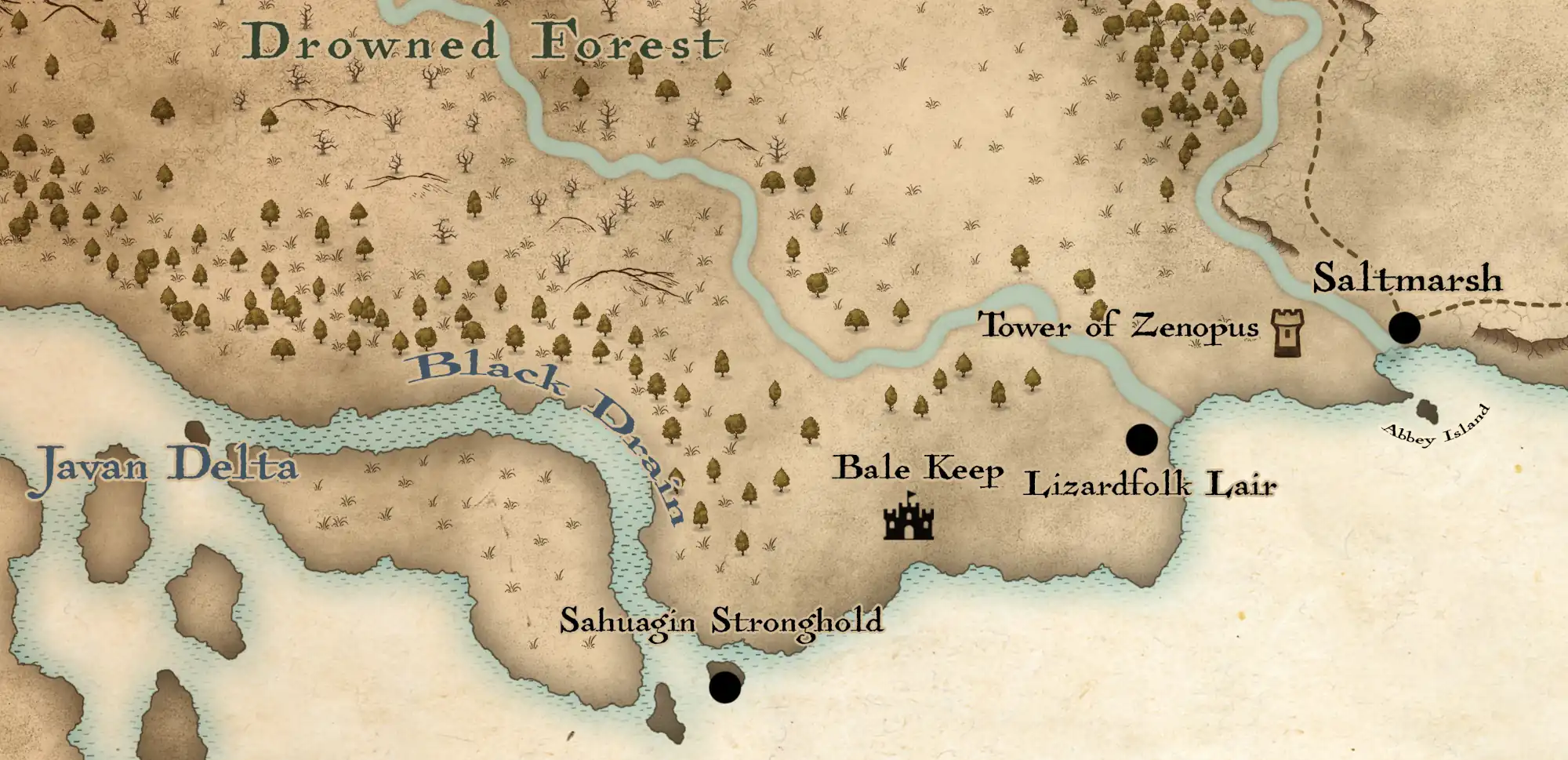
Their greatest settlement stood on an island at the mouth of the Black Drain, a tributary of the Javan River, and connected by a stone causeway to the mainland. Over generations, it became their capital and a symbol of renewal, a fresh start rooted in their old faith.
But not all lizardfolk changed course.
The Northern Remnant
A smaller faction remained in the northern Hool Marsh. They kept alive their worship of Sess’inek, their hatred for humans, and their memories of Sakatha’s glory. They raided travelers occasionally along the old road, but their numbers were too small to pose a real threat.
Not until Sakatha returned.
Modern Era (576 CY)
The Southern Clan: The Dunwater Alliance
A few years ago, disaster struck. The sahuagin, commonly called “sea devils”, attacked and overran the lizardfolk island-capital, slaughtering hundreds.
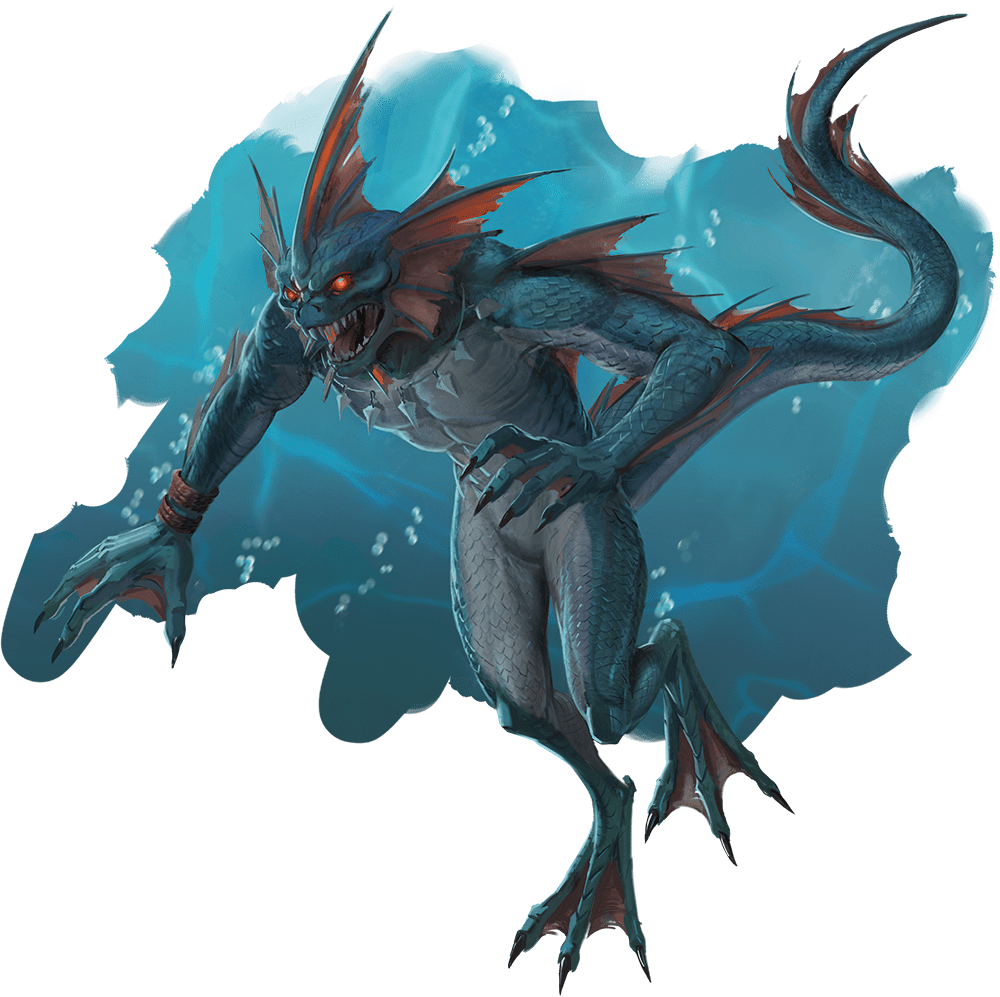
Their high sahaugin priestess, Thadrah, used powerful rituals to sink the island, lowering the seabed until the fortress was beneath 80 feet of water, creating the Sahuagin Stronghold (see map above) (U3: The Final Enemy).
The lizardfolk survivors retreated to an abandoned fortification, lizardfolk lair (see map above) at the mouth of the Dunwater River. Under Queen Othokent, they began forming a defensive alliance. Ambassadors from the koalinth, locathah, and merfolk were invited to unite against the sahuagin. The sea elves were deliberately excluded due to their feud with the koalinth. (U2: Danger at Dunwater)
As for humans, Queen Othokent remains wary of “landwalkers,” doubtful of their usefulness against the sahuagin and perhaps burdened by her people’s ancient guilt. However, she has been secretly negotiating with smugglers out of Saltmarsh for weapons for the coming war: (U1: Sinister Secrets of Saltmarsh)
Still, the Dunwater Alliance represents hope: a lizardfolk civilization fighting to survive and rebuild.
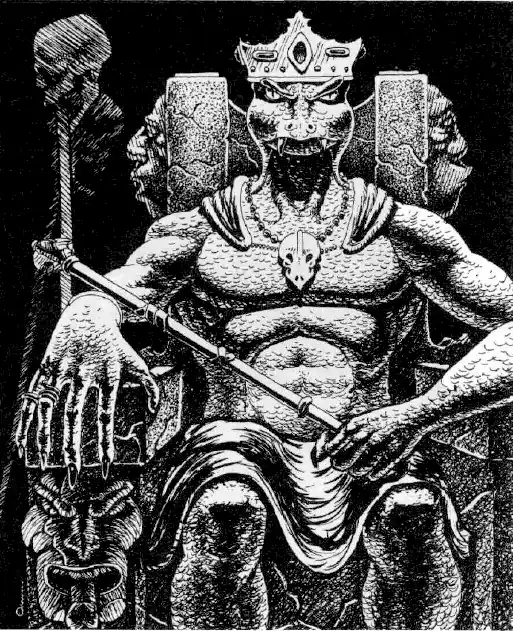
The Northern Clan: Return of the Lizard King
Two centuries after his death, Sakatha rose again, reborn as a vampire, his dying wish twisting him into the perfect instrument of vengeance. The northern tribes, still devoted to Sess’inek, welcomed him back without hesitation.
Mordrin is a human evil cleric of Demogorgon, the Prince of Demons. Demogorgon is widely believed to have unleashed Sess’inek upon the mortal world, and Sess’inek’s corruption twists select lizardfolk into “lizard kings.”
Mordrin saw Sakatha’s resurrection as the perfect opportunity to ignite chaos across the lower Dreadwood region. By supporting Sakatha’s violent resurgence, he advances Demogorgon’s design:
To drown the lands of the faithless in terror and blood, and prove once more that the Prince of Demons cannot be defied.
Sakatha’s power is enormous, though his chaotic nature undermines his focus. Mordrin acts as the guiding hand, pushing the Lizard King toward open war.
Two Peoples, One Ancestry
By 576 CY, the lizardfolk of the Hool Marsh have effectively split into two cultures:
Southern Clan (Lower Dunwater River)
- Follows Semuanya
- Values survival, stability, and diplomacy
- Seeks alliances with aquatic neighbors
- Ashamed of their ancient role under Sakatha
- Led by Queen Othokent
Northern Clan (Northern Hool Marsh)
- Follows Sess’inek
- Embraces predation, domination, and vengeance
- Worships Sakatha’s return as divine fulfillment
- Helped by Mordrin, a human cleric of Demogorgon
- Seeks the destruction of the human settlements, especially Waycombe and Vendare.
Final Thoughts
The lizardfolk of the Hool Marsh are not a monolithic race. They are a people fractured by history, shaped by faith, and caught between two very different futures. Their duality, Semuanya’s survival vs. Sess’inek’s domination, defines their culture, their politics, and ultimately, their role in Legends of Saltmarsh.
If your players enter the Hool Marsh, they won’t just be stepping into a swamp.
They’ll be stepping into a thousand-year struggle between what the lizardfolk were, what they became, and what they might yet become.
Content, Maps, Adventures, and More
Maps
I have created a set of regional maps for the Hool Marsh and surrounding areas, all available as a free download (Regional Map Pack):
- Borderlands – Covers the region beneath the Dreadwood and the northern Hool Marsh, including Waycombe and the northern Dunwater.
- Saltmarsh Coast – Includes the Dunwater River, Black Drain, and the Drowned Forest.
- Dreadwood – A regional map of the Dreadwood and the northern Hool Marsh.
- Javan Bay – Focuses on the Javan Bay coastline and surrounding settlements.
Adventures - Official Modules
- Ghosts of Saltmarsh (5e) – Contains the classic U1–U3 adventure arc. Available on D&D Beyond.
- U1–U3 Original Modules (1e) – Sinister Secret of Saltmarsh, Danger at Dunwater, The Final Enemy — available on DMs Guild.
- I2 Tomb of the Lizard King (1e) – Available on DMs Guild.
- I2 Tomb of the Lizard King (5e conversion) – Also available on DMs Guild.
Legends of Saltmarsh
I’ve created a growing collection of locations, adventures, side quests, NPCs, maps, and lore for the region. All of this is available:
- Free online
- For supporting members via:
- Foundry VTT
- LegendKeeper (LK) files
- Markdown files (for Obsidian, Notion, and other MD-compatible tools)
Links
- Legends of Saltmarsh – Free Online Version
- Legends of Saltmarsh – LegendKeeper + Markdown Files
- Legends of Saltmarsh – Foundry VTT Module

Member discussion: